Mould needs moisture, so the way to stop it is to dry the building quickly and completely after any leak or flood. Where mould has already grown, it should be contained, physically removed with HEPA vacuuming and cleaning, treated, and the moisture source fixed. Painting over it or spraying bleach does not solve the problem.
- 1Mould needs moisture: drying the building fast is the best prevention.
- 2A musty smell is often the first sign, before any mould is visible.
- 3Proper remediation contains, removes and treats mould, then fixes the moisture source.
- 4Bleach and paint hide mould; they do not remove it from porous materials.
Why mould follows water damage
Mould spores are present in almost every building. They only become a problem when they find moisture and something to feed on, such as plasterboard paper, timber, carpet backing or dust.
In warm, humid South East Queensland conditions, mould can begin to grow on damp materials within 24 to 48 hours. A slow leak behind a wall, a wet carpet left to dry on its own or a building closed up after a storm are the most common causes.
Early warning signs
Mould is not always visible straight away. Staff often notice it before facility managers do, so take complaints about smell or stuffiness seriously.
- A musty or earthy smell, especially first thing in the morning
- Spotting or staining on ceilings, walls or around vents
- Bubbling paint, swollen skirting boards or lifting floor coverings
- Condensation on windows or ductwork that does not clear
- Musty smell, especially first thing in the morning
- Spotting or staining on ceilings, walls or vents
- Bubbling paint or swollen skirting boards
- Lifting or damp floor coverings
- Condensation that does not clear
What proper mould remediation involves
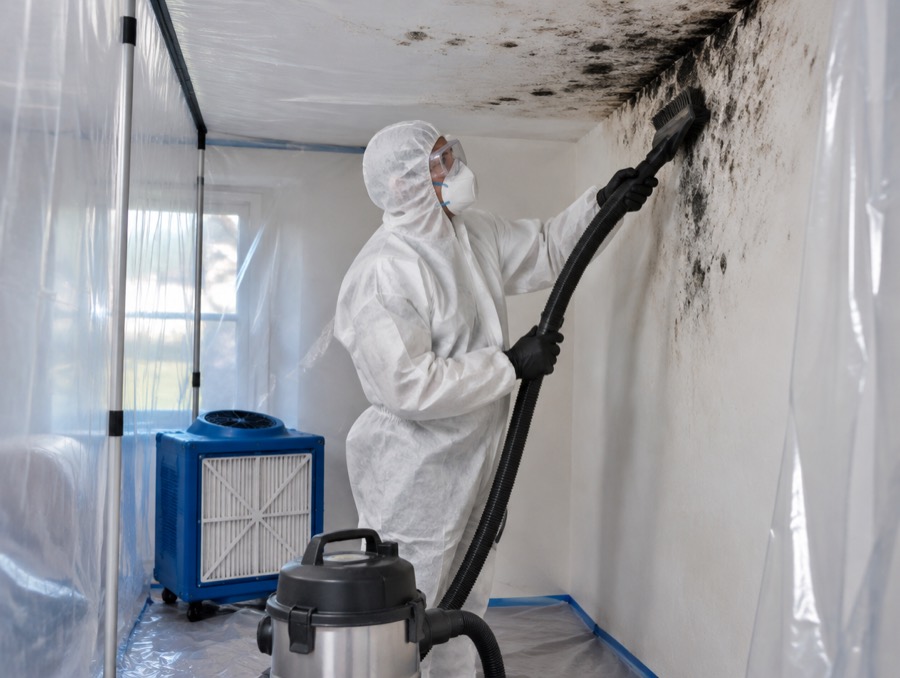
The goal is to remove the mould and the conditions that allowed it to grow, not to hide it. On commercial sites that means working in a controlled way so spores are not spread to clean parts of the building.
- Inspection to find the extent of the mould and the moisture source
- Containment of the affected area with sheeting and controlled airflow
- HEPA vacuuming and physical removal from surfaces
- Removal of badly affected porous materials such as plasterboard or carpet
- Antimicrobial treatment and a final clean before re-occupation
Why bleach and paint are not the answer
Household bleach can lighten the colour of mould on hard surfaces but does little for mould that has grown into porous materials, and the added moisture can make things worse. Painting over mould traps it and it usually comes back through the new paint.
If the moisture source is not fixed, any clean-up is temporary. A leaking roof, plumbing fault or poor ventilation has to be dealt with as part of the job.
Preventing it after the next storm
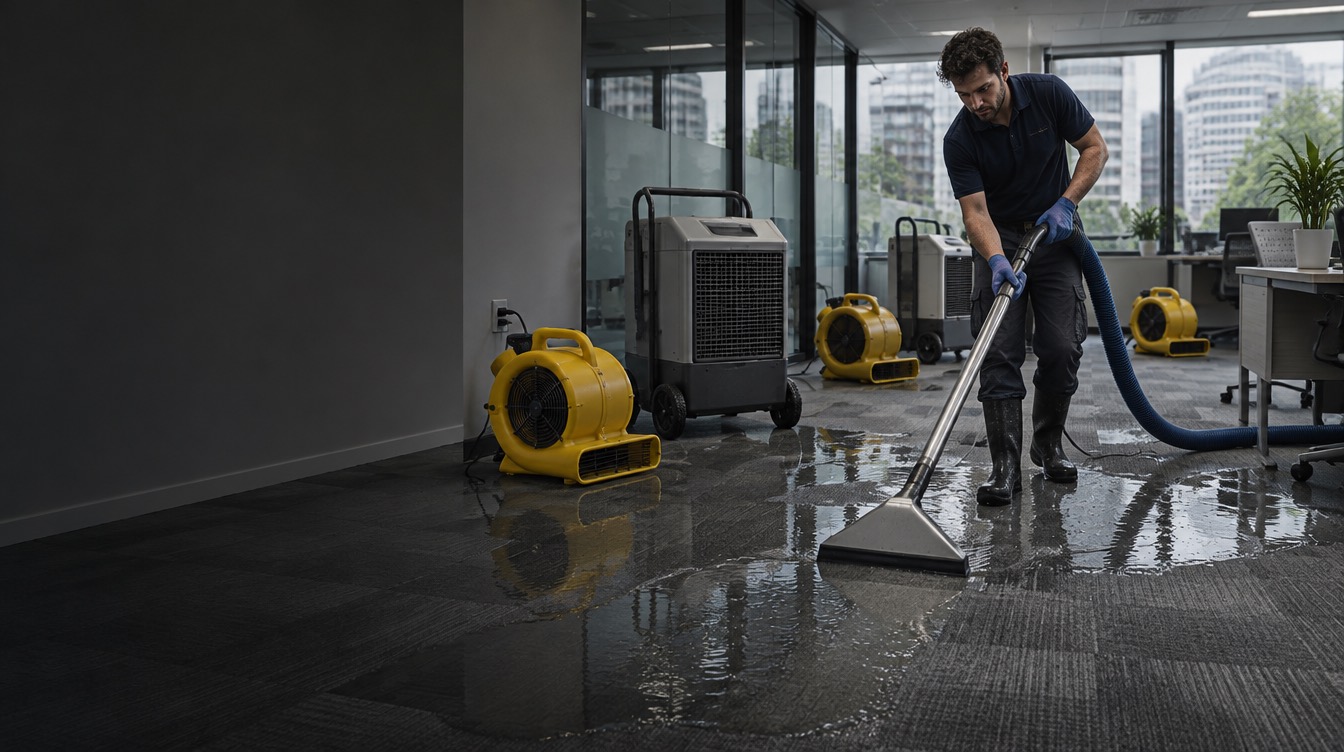
The best prevention is speed. After any leak, flood or storm, get water extracted and drying equipment on site the same day, and keep monitoring moisture until readings are back to normal. Regular checks of roofs, gutters, air conditioning drains and plant rooms catch slow leaks before they become mould.
Frequently asked questions
Is mould in the workplace a WHS issue?+
Yes. Employers have a duty to provide a safe work environment, and mould can affect people with allergies, asthma or weakened immune systems. Visible mould or a persistent musty smell should be investigated and dealt with.
Can we clean small amounts of mould ourselves?+
Very small spots on hard, non-porous surfaces can be cleaned, but recurring mould, mould on plasterboard or carpet, or mould after water damage should be handled by a remediation crew so the cause is found and spores are not spread.
How long does commercial mould remediation take?+
Small areas can be completed in a day. Larger jobs involving containment, material removal and drying usually take several days, depending on the size of the area and the source of the moisture.